Free shipping over $60 · 30-day returns · Dispatched within 24 hours

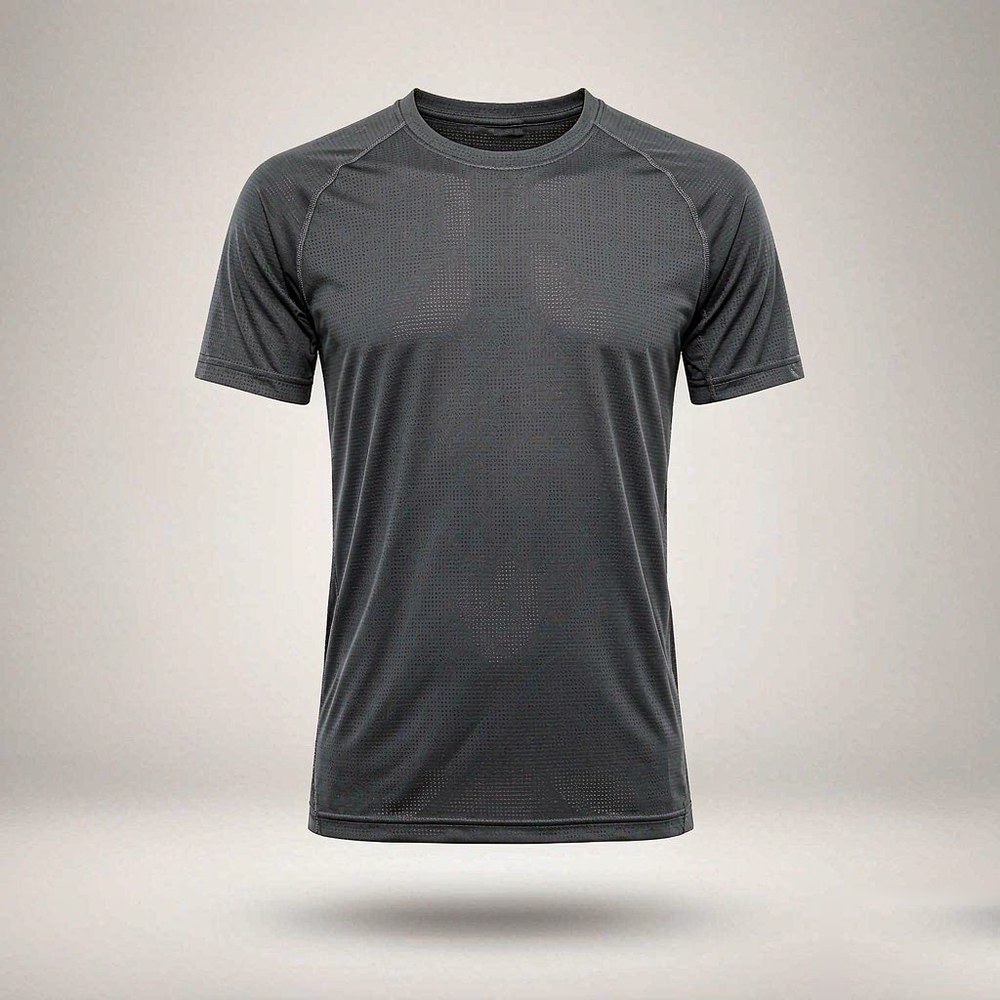
Mesh or Compression? Pick the Right Base Layer
Both move sweat. They solve different problems. A short guide to picking the right tee for the session in front of you.

Every tee we make sits somewhere between two jobs: moving air, or holding shape. Most
training questions about fabric come down to which of those you need more of.
Mesh is for heat
An open knit — our AeroDry micro-mesh runs at 130gsm — does one thing extremely well: it lets air
through. On a run, the airflow you generate does the cooling, and mesh multiplies it. The trade-off is
that an open knit does not compress anything. It sits close, but it does not hold.
Choose mesh when: you are outdoors, the temperature is above roughly 15 C, and the session is
continuous — running, cycling, rowing, court sports.
Compression is for load
FlexComp is a dense four-way knit at 200gsm. It does not breathe as freely, but it reduces muscle
oscillation and holds the fabric against the skin so it cannot bunch under a vest or a jersey. It also
keeps you warmer, which is either the point or a problem depending on the day.
Choose compression when: you are lifting, doing contact or change-of-direction work, training in
cool conditions, or layering under another garment.
The overlap nobody mentions
Most people do not need both. If you train four times a week in a commercial gym, a 190–260gsm
training tee will cover three of those sessions and the compression layer covers the fourth. If you run
and lift, buy one of each and stop thinking about it.
Fabric weight, briefly
- Under 150gsm — race weight. Fast drying, minimal coverage, transparent when wet
if the knit is not dense. - 150–200gsm — the everyday range. Drapes, breathes, survives washing.
- 220–260gsm — heavy. Holds a shape, hides everything, takes longer to dry.
If you are between two options, take the lighter one for summer and the heavier one for the gym. The
garment you actually reach for is the one that matches the room you are standing in.